



Advertisement
Advertisement
Key Points
Bulgaria has received approval to join the euro zone.
The inclusion of Bulgaria in the euro zone will increase the bloc's membership from 20 to 21 countries.
To adopt the euro, countries must meet several criteria, including price stability.
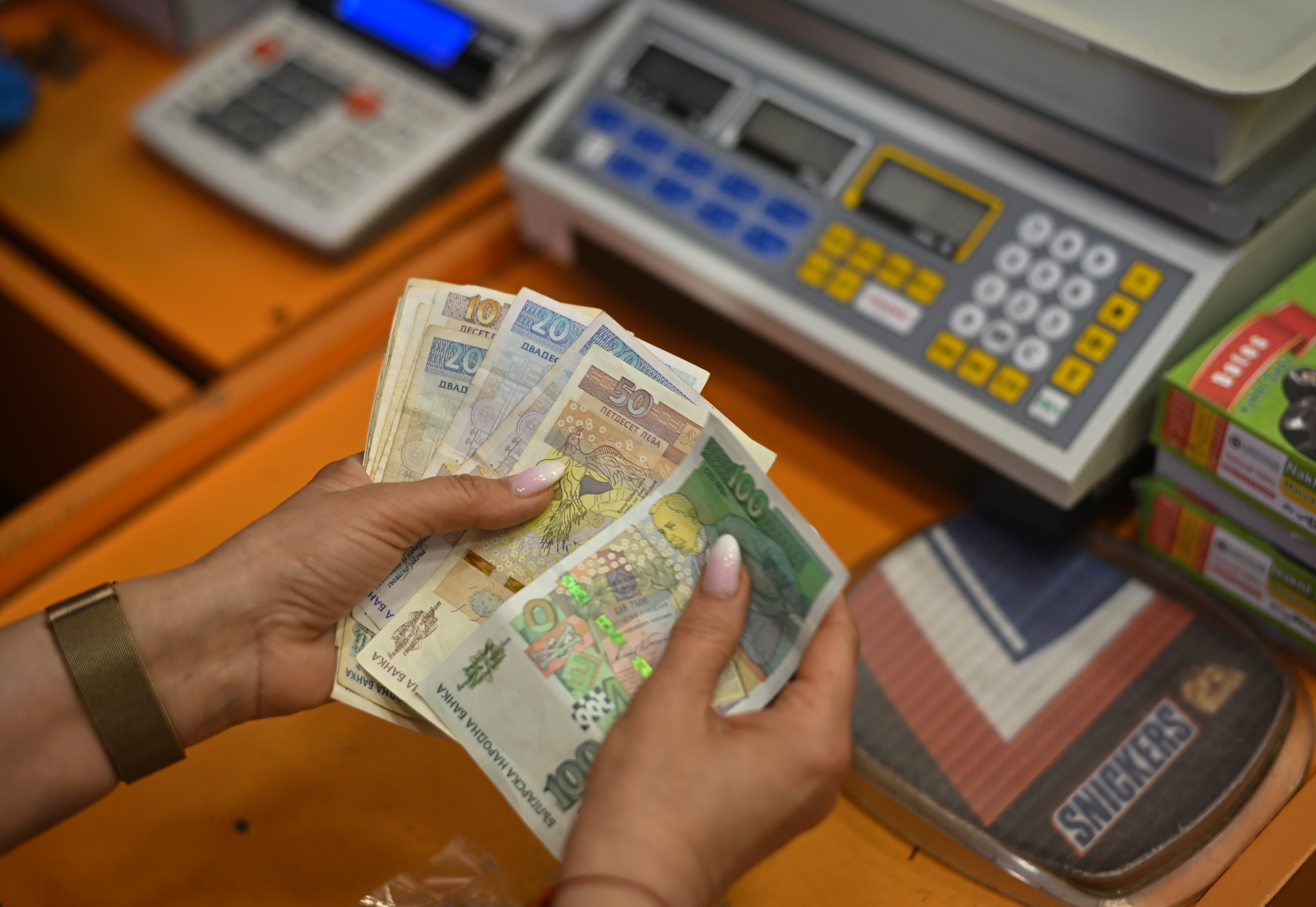
A worker counts Bulgarian Lev banknotes at a store in Sofia, Bulgaria, on Friday, March 29, 2024.
Oliver Bunic/Bloomberg via Getty Images
On Wednesday, Bulgaria received the green light to enter the euro zone, potentially increasing the bloc's membership from 20 to 21 nations.
Both the European Commission and the European Central Bank evaluated that Bulgaria has satisfied the necessary conditions to adopt the euro starting next year.
“This favorable convergence assessment sets the stage for Bulgaria to introduce the euro on 1 January 2026, becoming the 21st EU Member State to join the euro area,” said Philip Lane, a member of the ECB Executive Board, in a press release.
The European Commission referred to the assessment as “a crucial and historic milestone in Bulgaria’s path towards euro adoption” in an official statement.
European Commission President Ursula von der Leyen congratulated Bulgaria, stating that this decision “will lead to increased investment and trade with euro area partners, and greater stability and prosperity for the Bulgarian populace.”
“Bulgaria will also gain its rightful influence in shaping euro area decisions,” she mentioned in a social media post.
This represents a change from last year’s reports, which indicated that Sofia failed to meet the so-called convergence criteria required for currency adoption due to excessively high inflation rates.
One significant hurdle was inflation. According to statistics agency Eurostat, Bulgaria's harmonized consumer price index—comparable across European countries—was 2.8% in April.
Price stability is one of several requirements a country must satisfy to join the euro zone and, consequently, the European Central Bank. Other conditions include restrictions on the size of the nation's government deficit and debt ratio, average nominal long-term interest rate, and exchange rate stability.
There is also a legal requirement ensuring the independence of the central bank.
Since joining the European Union in 2007, Bulgaria committed to joining the euro zone and replacing the Bulgarian lev with the euro as its official currency. Currently, around 341 million people utilize the euro across the existing 20 euro zone countries, according to the European Union. The ECB reports that over 29 billion euro banknotes, valued at more than 1.5 trillion euros ($1.7 trillion), are in circulation.
The exchange rate was set at 1.96 lev per euro when Bulgaria joined the mechanism that anchors the currencies.
Opinions about joining the euro vary within Bulgaria. A survey published last year by the EU suggested that 49% of the public supported joining the euro bloc. Political views are also divided, with some nationalist parties and the country’s president opposing it, while Prime Minister Rosen Zhelyazkov supports the move.
Alongside its assessment, the European Commission has also adopted proposals for a council decision and regulation regarding Bulgaria's euro adoption at the start of the next year. The EU council has the ultimate authority on countries joining the euro zone.

Advertisement
Advertisement
Advertisement


